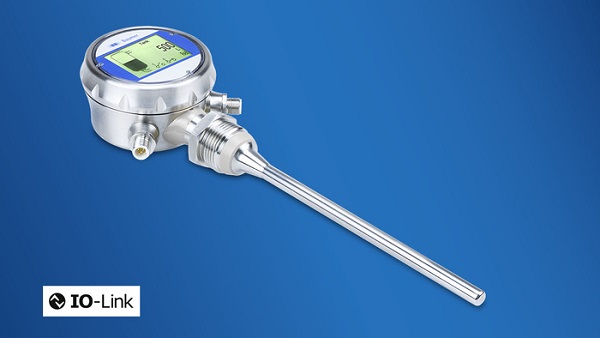
continuous level measurement sensor
Continuous level measurement sensors are vital components in modern industrial processes, offering reliable and accurate monitoring of liquid levels.
Enquire Now
In industrial automation and process control, continuous level measurement sensors are essential for monitoring and managing liquid levels across a range of applications. These sensors enhance safety, efficiency, and reliability in operations by delivering real-time data on liquid levels.
Overview of Level Measurement Sensors
Level sensors are essential tools for monitoring liquid levels in tanks and vessels across various industries. Ultrasonic level sensors utilize sound waves to accurately measure the distance to the liquid surface, providing reliable data without contact. These sensors excel in challenging environments, offering durability and precision.
Additionally, liquid level sensors come in various forms, such as capacitive and resistive types, each suited for specific applications. By ensuring accurate monitoring, these devices help prevent overflows, optimize resource use, and enhance safety measures in operations. Integrating level sensors into your systems can significantly improve process efficiency and reduce operational risks.
Ultrasonic level sensors offer real-time data crucial for preventing overflow and maintaining optimal operational efficiency. By emitting sound waves and measuring their reflection time, these sensors accurately determine the distance to the liquid surface, allowing for precise monitoring. This capability is vital in industries where liquid levels fluctuate frequently, such as in chemical processing or wastewater management.
Moreover, the non-contact nature of ultrasonic level sensors minimizes wear and tear, extending their lifespan and reliability. Integrating these advanced liquid level sensors into control systems not only enhances safety but also facilitates better resource management, ultimately driving operational excellence.
Types of Continuous Level Measurement Sensors
Various types of continuous level measurement sensors cater to diverse industrial needs. Ultrasonic level sensors stand out for their non-contact measurement capabilities, employing sound waves to gauge liquid levels accurately.
Capacitive level sensors, on the other hand, detect changes in dielectric constant, making them ideal for non-metallic containers. Resistive level sensors operate by measuring resistance changes due to liquid presence, suitable for conductive liquids.
Additionally, radar level sensors utilize microwave signals for precise measurements in challenging environments. Each type of liquid level sensor is designed to meet specific application requirements, ensuring effective monitoring and contributing to enhanced operational safety and efficiency.
An ultrasonic level sensor measures liquid levels by emitting high-frequency sound waves that reflect off the liquid surface and return to the sensor. It calculates distance based on the time taken for the waves to return, allowing for accurate measurements without direct contact with the liquid. This technology is ideal for corrosive or contaminated environments and is applicable in water treatment, food processing, and chemical storage, making it essential in modern industrial applications.
Liquid level sensors are essential for monitoring fluid levels in various containers and systems. Ultrasonic models use sound waves for non-contact measurements, making them suitable for harsh environments while reducing maintenance requirements. These sensors are particularly important in industries such as wastewater management and food processing, where accurate liquid level monitoring is crucial for safety and efficiency. Their incorporation into control systems helps streamline processes and improve resource management.
A level transmitter is essential for continuous liquid level measurement, converting physical levels into standardized signals for monitoring and automation. Technologies such as ultrasonic, capacitive, and radar each have unique benefits tailored to different applications. Ultrasonic transmitters, for example, use sound waves for accurate, contactless measurements. Incorporating these devices in industrial processes improves monitoring, prevents overflow, and optimizes resource use, ultimately enhancing operational performance.
A level probe is an essential instrument for measuring liquid levels in industrial applications. Available in capacitive, resistive, and ultrasonic types, these devices detect liquid presence in tanks and vessels. Ultrasonic probes use sound waves for non-invasive measurements, suitable for hazardous environments, while capacitive probes sense changes in the dielectric constant of liquids, effective in non-metallic containers. Integrating level probes into monitoring systems improves safety, process optimization, and resource management.
The Brands provide Level Sensors
Various brands manufacture high-quality level sensors designed for different industrial applications. Notable companies like Siemens and Endress+Hauser offer advanced ultrasonic sensors for precise liquid measurements with low maintenance.
Honeywell and Vega provide durable sensors suited for chemical processing and wastewater management, while KROHNE and Yokogawa offer reliable solutions that integrate well into existing systems, improving safety and efficiency. Selecting the appropriate brand is crucial for optimizing performance and resource management in industrial settings.